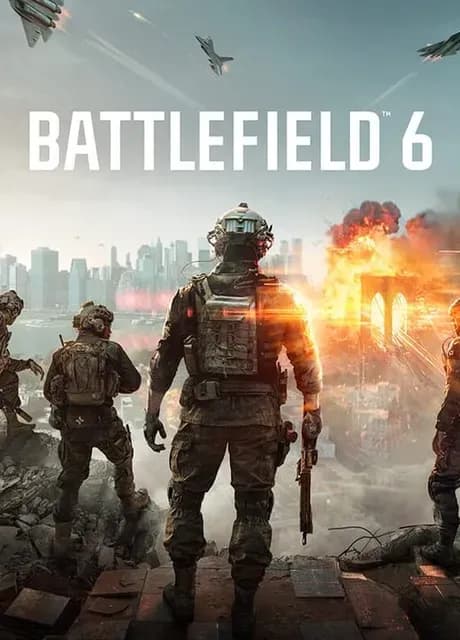



Battlefield 6 Season 2 Nightfall Goes Dark with Underground Map
New Hagental Base map brings night vision gameplay and close-quarters combat
Lights Out in Hagental Base#
Battlefield 6's second major Season 2 update, Nightfall, introduces darkness and low-visibility mechanics across multiplayer and the Redsec mode. The centerpiece is Hagental Base, a new underground map designed for close-quarters infantry combat with malfunctioning lights that plunge large sections into near-total darkness.
This marks a significant shift for Battlefield 6's map design philosophy. While previous entries in the series have experimented with time-of-day variations, Nightfall commits fully to darkness as a core gameplay mechanic rather than just an aesthetic choice. The malfunctioning lights aren't static, either. They flicker unpredictably, creating moments where players must adapt on the fly as visibility conditions change mid-firefight.
Players will need night vision goggles and flashlights to navigate Hagental Base's underground tunnels, which feature destructible walls and ceiling cave-ins inspired by the classic Operation Metro map. The update includes a dedicated Nightfall playlist combining Team Deathmatch, Squad Deathmatch, and Domination modes.
The Metro comparison is deliberate and likely to resonate with longtime fans. Operation Metro became one of the franchise's most iconic (and divisive) maps precisely because it forced players into brutal chokepoint battles with limited flanking options. Hagental Base appears to take that formula and layer in the tactical complexity of light and shadow. Destructible walls should open up alternate routes when the main corridors become meat grinders, while ceiling cave-ins add environmental hazards that can reshape the battlefield mid-match.
The night vision and flashlight mechanics introduce interesting risk-reward decisions. Night vision goggles let you see in the dark but limit peripheral awareness and make you vulnerable to sudden light sources. Flashlights, meanwhile, illuminate your path but also broadcast your position to every enemy in the vicinity. Expect coordinated squads to designate specific players as "point" with lights while others hang back with NVGs, creating layered defensive and offensive formations that weren't viable in traditional Battlefield maps.
New Weapons and Vehicles#
Nightfall adds two weapons to the arsenal: the CZ3A1 SMG with a high rate of fire, and the vz.61 Skorpion fully automatic sidearm. Two new two-seater dirt bikes, the M1030-M1 and TM/O 450, bring speed and maneuverability to the battlefield.
The CZ3A1 seems purpose-built for Hagental Base's tight corridors. High rate-of-fire SMGs have historically dominated close-quarters Battlefield maps, and in low-visibility environments where target acquisition happens in split seconds, the ability to dump rounds quickly becomes even more valuable. Expect this to become the meta pick for aggressive players pushing through the tunnels.
The vz.61 Skorpion as a sidearm is particularly interesting. Fully automatic pistols have always occupied a weird space in Battlefield's weapon balance. They're devastating in panic situations when your primary runs dry, but the recoil usually makes them impractical beyond point-blank range. In the darkness of Hagental Base, though, those close-range panic moments will happen constantly. The Skorpion could become the difference between surviving a corner ambush and respawning.
The dirt bikes represent DICE's ongoing effort to add mobility options that don't require the full commitment of a tank or helicopter. Two-seater vehicles encourage squad coordination, letting a gunner provide covering fire while the driver focuses on navigation. On more open maps in the Nightfall rotation, these bikes should enable rapid objective rotations and flanking maneuvers that heavier vehicles can't match.
The Red Bull Supermoto limited-time event puts these bikes to work in eight-player competition across three knockout rounds. Meanwhile, Redsec gets Defense Testing Complex 3, a secret underground chemical testing facility with higher-rarity loot drops.
Limited-time vehicle events have become a staple of live-service Battlefield, offering a casual break from the intensity of standard multiplayer. The knockout format suggests an elimination-style race rather than traditional lap-based competition, which should keep matches fast-paced and accessible even for players who don't typically engage with vehicle gameplay.
Defense Testing Complex 3 continues Redsec's trend of offering higher-stakes PvE content with better rewards. The "secret underground chemical testing facility" theme fits perfectly with Nightfall's overall aesthetic, and higher-rarity loot drops give dedicated players a reason to grind the mode even if they primarily focus on multiplayer. Expect the community to quickly optimize routes and strategies for farming the best gear.
Balance Changes and Vehicle Tweaks#
DICE has nerfed Anti-Tank Mines, limiting players to six active mines that despawn three minutes after elimination. Vehicle handling sees improvements across the board: helicopter landing is more stable, tank braking responds better, and light transports now have a 'deturtling' function. Vehicle camera behavior has also been refined.
The mine nerf addresses a persistent frustration in Battlefield 6's vehicle meta. Previously, dedicated engineers could blanket entire sections of the map with mines that persisted even after death, creating invisible minefields that punished vehicle players for simply existing. The six-mine limit and three-minute despawn timer force more strategic mine placement. You'll need to predict vehicle routes and refresh your mines periodically rather than just spamming chokepoints and forgetting about them.
The despawn-on-death mechanic also reduces the effectiveness of "kamikaze" mine strategies where players would dump their entire mine inventory in a high-traffic area, die, respawn, and repeat. Now there's actual opportunity cost to mine placement.
Vehicle handling improvements suggest DICE is responding to community feedback about how clunky certain vehicles felt in Season 1. Helicopter landing has been a particular pain point. The previous physics model made it frustratingly easy to clip a rotor on terrain during landing attempts, resulting in explosive deaths that felt unearned. More stable landing should make transport helicopters more viable for squad insertions.
The tank braking improvement is subtle but significant. Battlefield's vehicle physics have always walked a fine line between realistic momentum and responsive controls. Better braking gives tank drivers more precision when positioning for shots or reversing out of danger, which should raise the skill ceiling for vehicle play.
The 'deturtling' function for light transports is a quality-of-life feature that addresses one of gaming's most universally frustrating experiences: flipping your vehicle and being unable to right it. Instead of abandoning a perfectly functional jeep because it's upside down, players can now recover and get back in the fight. Small change, huge impact on moment-to-moment gameplay flow.
Camera refinements might sound minor, but vehicle camera behavior dramatically affects combat effectiveness. Smoother camera transitions when entering and exiting vehicles, better third-person angles for situational awareness, and reduced camera shake during movement all contribute to vehicles feeling more responsive and less disorienting to operate.
Are you ready to fight in the dark, or will you stick to the daylight maps?