

Nvidia's DLSS 5 Generative AI Filter Sparks Controversy at GTC
New technology promises AI-enhanced graphics, but community questions artistic integrity
Nvidia Unveils DLSS 5 with Generative AI#
Nvidia announced DLSS 5 at its GTC conference, marking a significant departure from previous versions of the upscaling technology. According to The Verge, CEO Jensen Huang called it a "GPT moment for graphics," positioning the new feature as a generative AI filter that modifies game visuals in real-time rather than simply upscaling resolution.
Unlike DLSS 3 and 4, which focused on frame generation and improved temporal stability, DLSS 5 takes a fundamentally different approach. Instead of reconstructing higher-resolution images from lower-resolution input, the technology actively reinterprets and modifies visual elements using generative AI models. This means textures, lighting, and even geometry can be altered on the fly, theoretically producing visuals that exceed what the game engine originally rendered.
The shift represents Nvidia's bet that AI can do more than just fill in pixels or generate intermediate frames. It's attempting to enhance the visual experience at a deeper level, similar to how AI image generators can transform photographs. For PC gamers who've spent years tweaking settings for the perfect balance of performance and fidelity, this raises an obvious question: are we still playing the game the developers intended, or something the AI thinks looks better?
Community Reaction: The "Yassify Filter" Debate#
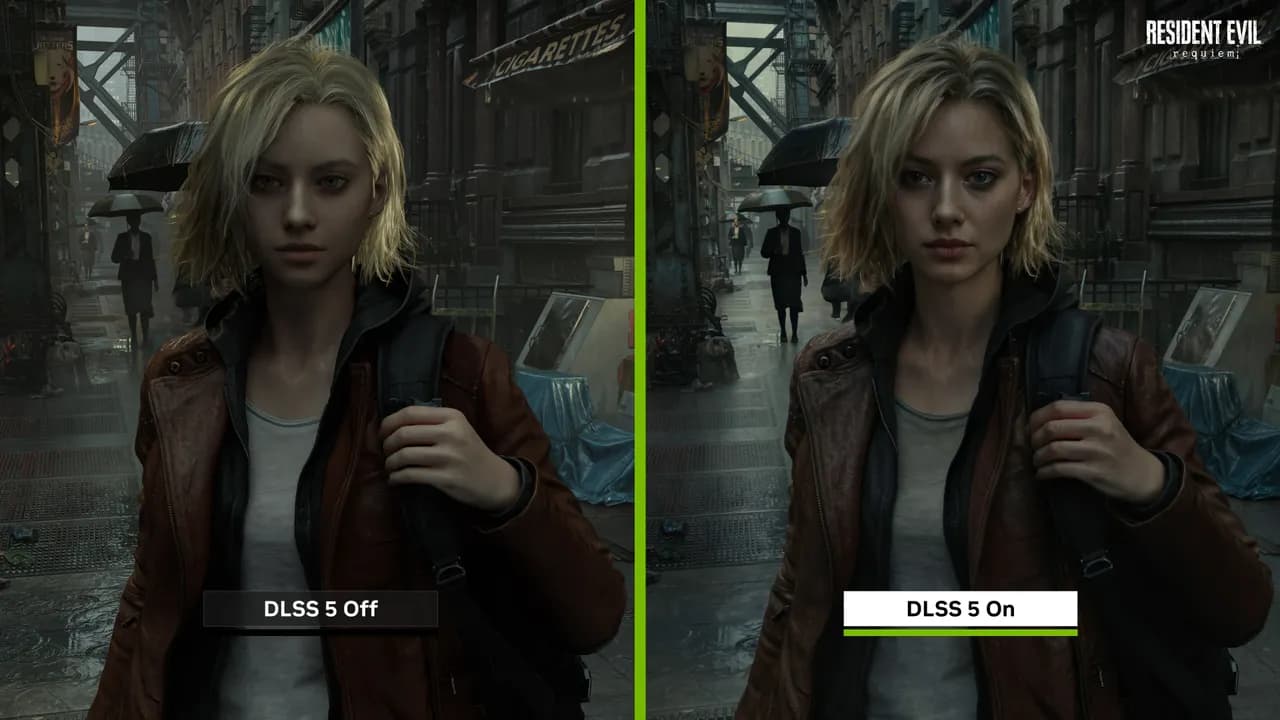
Early reactions to DLSS 5 have been divisive. GameSpot reports that many in the gaming community have mockingly dubbed it a "yassify filter," with critics arguing the AI alterations produce what they're calling "slop" that fundamentally changes a game's artistic vision. The technology appears to smooth textures and modify visual elements beyond traditional upscaling, raising questions about whether enhanced fidelity comes at the cost of artistic intent.
The "yassify" comparison is particularly cutting because it references the meme trend of over-smoothing and beautifying images to absurd degrees. Critics worry DLSS 5 does something similar to games, applying a homogenized "AI aesthetic" that strips away intentional roughness, grit, or stylistic choices. A horror game's deliberately unsettling textures might get smoothed into something more palatable. A stylized indie title's hand-crafted look could be overwritten by what the AI model considers "better."
Social media has been flooded with comparison shots showing DLSS 5's alterations. Some users point to improved detail in distant objects and more realistic material properties. Others highlight examples where the AI appears to hallucinate details that don't exist in the source material, or where it fundamentally misunderstands the art direction. One viral post showed a character's face being subtly but noticeably altered, raising concerns about whether DLSS 5 could inadvertently change character appearances in ways developers never intended.
The debate echoes earlier controversies around AI upscaling in emulation and remasters, where purists argued that smoothing filters destroyed the authentic look of classic games. But DLSS 5 operates at a different scale, potentially affecting every new AAA release if it becomes standard on RTX 50-series cards and beyond.
Bethesda Addresses Developer Control#
In response to the controversy, Bethesda has clarified how DLSS 5 will be implemented in their games. According to GamesRadar+, the studio stated the technology "will all be under our artists' control, and totally optional for players." This approach suggests developers will have final say over how the AI filter affects their games, while players can choose whether to enable it.
Bethesda's statement is significant because it acknowledges the core concern: who gets to decide what a game looks like? The studio's emphasis on artist control suggests they'll be curating which aspects of DLSS 5 are enabled and how aggressively the AI modifies visuals. This could mean whitelisting certain effects while blocking others, or providing developers with granular controls over the AI's behavior in different scenarios.
The "totally optional for players" part is equally important. Unlike DLSS 3's frame generation, which some games tied to other graphical settings, Bethesda appears committed to making DLSS 5 a clear toggle. This gives players the final say, which is crucial for a feature this controversial. If you want to see Starfield or The Elder Scrolls VI exactly as the artists intended, you can leave it off. If you want to see what Nvidia's AI makes of those worlds, you can flip it on.
Other developers have been quieter about their plans. It remains to be seen whether Bethesda's approach becomes the industry standard or if some studios will embrace DLSS 5 more aggressively, potentially making it a recommended or default setting.
What This Means for PC Gaming#
DLSS 5 represents Nvidia's push into generative AI for real-time graphics, but the reception highlights ongoing tensions between technological advancement and artistic preservation in gaming. Whether this becomes a standard feature or a controversial footnote may depend on how developers and players respond once it's widely available.
The technology also raises practical questions about performance and compatibility. Generative AI is computationally expensive, and while Nvidia's dedicated tensor cores can handle the workload, it's unclear how much overhead DLSS 5 adds compared to previous versions. Will it provide the same performance uplift as DLSS 2 or 3, or will the AI processing eat into those gains? And what about older RTX cards - will DLSS 5 be exclusive to the 50-series, or will Nvidia backport it to earlier hardware?
There's also the question of how DLSS 5 will interact with competitive gaming. If the AI is modifying visuals in real-time, could it create inconsistencies in what players see? Could it give some players an advantage by making certain details more visible? Esports organizations and competitive communities will likely scrutinize this closely, and we might see DLSS 5 banned in tournament settings if it's deemed to create an uneven playing field.
Longer term, DLSS 5 could influence how games are developed. If developers know an AI filter will be applied to their work, will they adjust their art pipelines accordingly? Will we see games designed with DLSS 5 in mind, potentially looking worse with it disabled? Or will the backlash push Nvidia to dial back the AI's aggressiveness, turning DLSS 5 into a more conservative enhancement?