

PEGI Introduces Major Rating Changes: Loot Boxes Now Trigger PEGI 16
New classifications for in-game purchases and online features arrive June 2026
Loot Boxes Now PEGI 16#
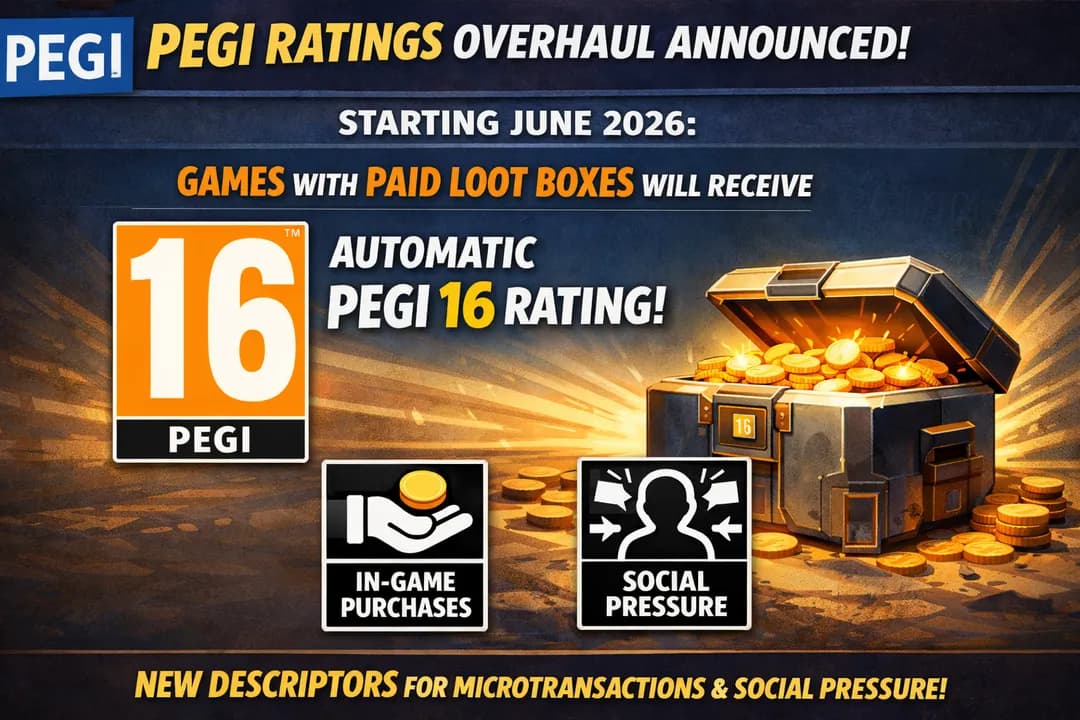
According to an official PEGI announcement, games containing paid random items like loot boxes will receive a PEGI 16 rating starting June 2026. The change is part of a comprehensive overhaul to Europe's age-rating system that introduces several new content descriptors.
This marks one of the most significant shifts in game classification since PEGI's inception. For years, regulators have struggled to address the gambling-adjacent mechanics that have become standard in AAA releases. While countries like Belgium and the Netherlands have taken aggressive stances (outright banning loot boxes in some cases), PEGI's approach attempts a middle ground: not prohibiting the mechanics, but restricting which audiences can access them.
The new system distinguishes between different types of in-game purchases. Games with cosmetic-only microtransactions or straightforward paid DLC will carry a PEGI 3 rating with appropriate descriptors. However, any game offering paid random item mechanics (loot boxes, gacha systems, card packs) will jump straight to PEGI 16, regardless of other content.
That last point is crucial. A colorful, cartoon-style game with zero violence could still land a PEGI 16 if it sells randomized items for real money. The rating isn't about blood or language anymore - it's about the psychological impact of variable reward schedules and the potential for players to spend unpredictable amounts chasing specific items.
New Descriptors for Modern Gaming#
PEGI is also introducing classifications for features that have become standard in online games:
In-Game Purchases: Clear labeling for games with any form of real-money transactions
Online Communication: Identification of games with chat, voice, or user-generated content features
Pressure to Play: A new descriptor for games using time-limited events, daily login rewards, or other mechanics designed to encourage regular engagement
That "Pressure to Play" descriptor is particularly interesting. It acknowledges what players have been saying for years: that FOMO-driven design (fear of missing out) can be just as manipulative as loot boxes themselves. Battle passes with expiration dates, limited-time cosmetics, daily login streaks that reset if you miss a day - these systems are engineered to keep you logging in, often turning games into obligations rather than entertainment.
The changes reflect PEGI's response to how gaming has evolved over the past decade. Titles like EA Sports FC, which include Ultimate Team card packs, would fall under the new PEGI 16 classification when the system takes effect. The same goes for mobile-style gacha games that have increasingly migrated to console and PC, from Genshin Impact to Marvel Snap.
Consider the ripple effects: FIFA (now EA Sports FC) has historically been rated PEGI 3, making it accessible to the youngest football fans. Ultimate Team, the mode built around opening player packs, generates billions in revenue annually. Does EA keep the loot boxes and accept that kids under 16 can't buy the game? Or do they redesign Ultimate Team's economy entirely?
Industry Impact#
The June 2026 implementation gives publishers time to adjust their monetization strategies or accept higher age ratings for their games. For franchises traditionally marketed to younger audiences, the loot box designation could force difficult decisions about in-game economies.
We've already seen some studios testing the waters. Fortnite, despite its cartoonish aesthetic, has largely moved away from randomized items in favor of direct purchases through its item shop. Epic's approach proves you can still print money without loot boxes - you just need compelling cosmetics and effective FOMO marketing. Whether other publishers follow that model or dig in their heels remains to be seen.
The sports game genre faces the biggest upheaval. NBA 2K, Madden, EA Sports FC - these franchises have built their modern identities around card-collecting modes funded by randomized packs. A PEGI 16 rating doesn't just limit their audience; it invites more scrutiny from parents and regulators who might not have paid attention when these games carried child-friendly ratings.
There's also the question of enforcement and loopholes. What about games that offer loot boxes but claim they can be earned through gameplay alone, with the option to buy them being "incidental"? What about battle passes that contain randomized rewards? The devil will be in the implementation details, and you can bet publishers are already workshopping ways to thread the needle.
Some in the industry argue this is regulatory overreach - that parents should monitor what their kids play rather than having blanket restrictions. Others see it as long overdue, pointing to the psychological research on how random rewards trigger the same neural pathways as gambling. The debate isn't new, but PEGI's decision forces it into the mainstream.
How do you think these changes will affect your favorite games? Will studios pivot away from loot boxes, or accept the higher rating?