

Embracer Group to License Deus Ex, Saints Row, and TimeSplitters to External Studios
New IP licensing strategy could bring dormant franchises back to life
Dormant Franchises May Return Under New Partners#
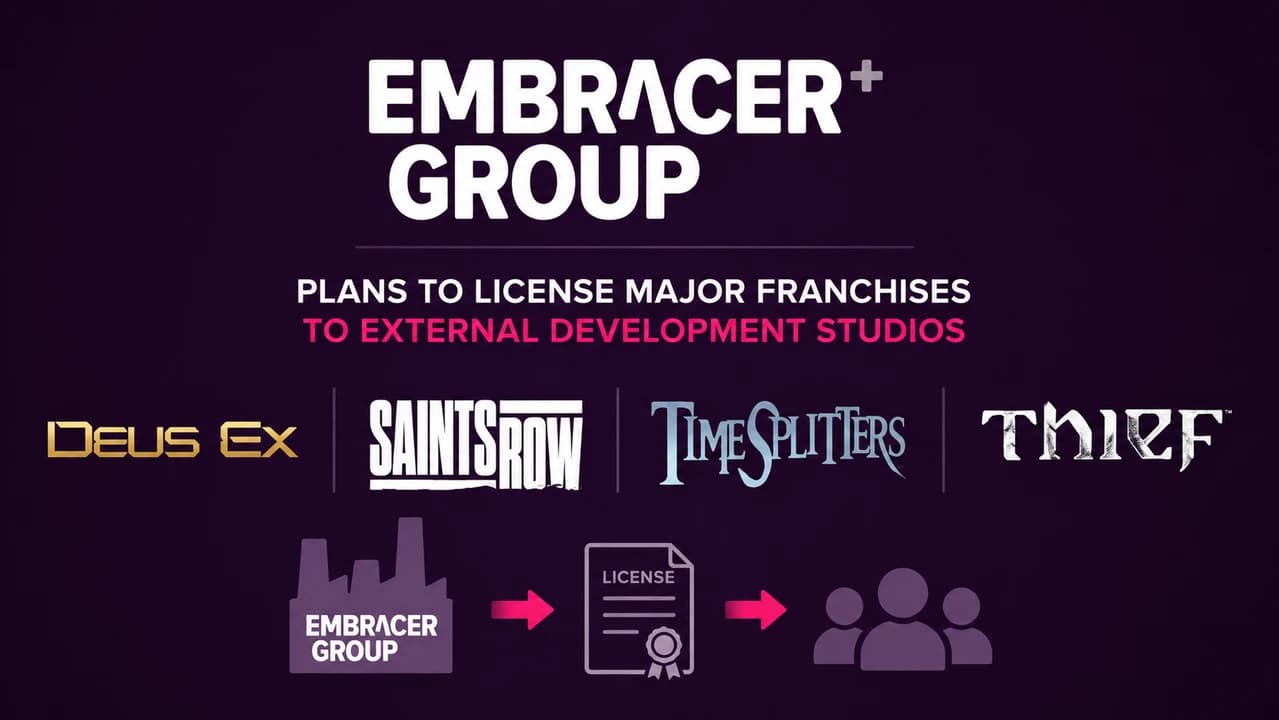
Embracer Group has announced plans to actively license out several major franchises to external development studios, according to Rock Paper Shotgun. The new IP and licensing business will make franchises including Deus Ex, Saints Row, TimeSplitters, and Thief available to outside partners.
This strategy marks a significant shift for Embracer, which has spent years acquiring studios and IP across the gaming industry. Rather than developing these titles internally, the company will now explore partnerships that could potentially lead to new entries in these dormant series. It's a move that acknowledges the reality many publishers face: owning beloved IP doesn't automatically mean you have the resources or expertise to do something meaningful with it.
What This Means for the Franchises#
The licensing approach could breathe new life into franchises that have been inactive for years. Deus Ex hasn't seen a mainline entry since 2016's Mankind Divided, a game that ended on a cliffhanger and left the immersive sim community hungry for closure. The cyberpunk RPG series has always been a critical darling, blending stealth, hacking, and player choice in ways that influenced everything from Dishonored to Cyberpunk 2077. With the immersive sim genre experiencing something of a renaissance lately, the timing could actually work in Deus Ex's favor.
TimeSplitters has been dormant even longer, sitting untouched since 2005. The cult classic FPS series built its reputation on creative time-travel scenarios, split-screen multiplayer that defined an era of couch co-op, and a map editor that let players craft their own chaotic matches. Free Radical Design, the original studio behind the series, attempted a comeback as Free Radical Design 2.0 under Embracer ownership, but that effort collapsed when the studio was shut down in 2023. A licensing deal might be the franchise's best shot at actually making it to market.
Saints Row received a reboot in 2022, though it underperformed critically and commercially. The series had already been struggling to find its identity after pivoting from GTA clone to over-the-top superhero sandbox. The reboot's attempt to dial things back and start fresh didn't resonate with fans who wanted the absurdity of Saints Row 3 and 4, nor did it win over newcomers. Volition, the studio behind the series since its inception, was shut down following the reboot's failure. Whether Saints Row can recover under a new developer remains an open question, especially in a market where open-world games need a strong hook to stand out.
Thief rounds out the announced franchises, another immersive sim that helped define the stealth genre. The 2014 reboot from Eidos Montreal was divisive, praised for its atmosphere and level design but criticized for streamlining mechanics and a forgettable story. The original trilogy from Looking Glass Studios remains influential, and there's definitely an audience for a proper return to form, especially given how well games like Dishonored proved the stealth-sim formula still works.
By partnering with external studios, Embracer can potentially revive these properties without the financial risk of full in-house development. This model allows specialized studios to take on projects that align with their strengths while Embracer retains ownership of the IP. It's similar to how Microsoft has licensed out Age of Empires or how Sega works with external teams on Sonic titles. The upside is that a passionate studio with the right expertise could deliver something special. The downside? Quality control becomes trickier, and there's always the risk of a licensed project feeling like a cash-in rather than a genuine continuation.
Part of Broader Restructuring#
The licensing initiative comes as Embracer continues restructuring operations following an aggressive acquisition period. The company went on a buying spree between 2019 and 2022, snapping up studios like Gearbox, Crystal Dynamics, and Eidos Montreal, along with IP ranging from Tomb Raider to The Lord of the Rings. The strategy was ambitious, but when a major $2 billion partnership deal fell through in 2023, Embracer was left overextended.
The company has closed studios, cancelled projects, and sold off assets over the past year as it works to stabilize its business. Volition, Free Radical Design, and several other teams were shuttered. Gearbox was sold to Take-Two. Saber Interactive was spun off. The restructuring has been painful for developers and fans alike, but it's also forced Embracer to get creative about how it manages its massive portfolio of IP.
Licensing these franchises out is a pragmatic solution. Embracer gets to monetize properties that would otherwise sit unused, and the gaming community gets a chance to see these series return. Whether that actually results in quality games depends entirely on who picks up the licenses and what kind of creative freedom they're given.